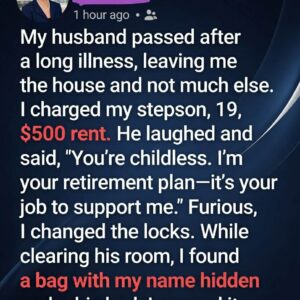
When my husband died after a long illness, the house felt too big and too quiet at the same time. Every room echoed with the memory of machines humming, whispered prayers at 3 a.m., and the careful way I’d learned to sleep on the edge of the bed so I wouldn’t disturb him. When it was over, people brought casseroles and sympathy cards, then slowly drifted back to their lives. I stayed behind with the mortgage, the utility bills, and a grief that felt heavier than any debt.
The will was simple. He left me the house and not much else. We’d burned through most of our savings on treatments and medications. I didn’t resent that—I would have sold the roof over my head if it meant one more good day for him. But love doesn’t pay electric bills, and once the shock faded, reality moved in.
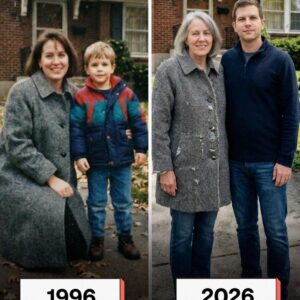
My stepson was nineteen then. Smart. Capable. Tall enough to look like his father when he stood in the doorway, which sometimes hurt more than I wanted to admit. He’d been living with us through the worst of the illness, watching me juggle hospital visits, night shifts, and stacks of unpaid envelopes on the kitchen table.
Eventually, I sat him down.
“I need you to contribute,” I said, my hands shaking slightly around my coffee mug. “Five hundred a month. Just to help with expenses.”
He laughed.
Not a nervous laugh. A dismissive one.
“You’re childless,” he said, leaning back in his chair like this was all a joke. “I’m your retirement plan. It’s your job to support me.”
The words hit harder than I expected. Childless. As if the years of scraped knees, late-night talks, and standing in the rain at school events didn’t count. As if caring for his father until my hands ached and my back screamed hadn’t woven us into a family.
I didn’t argue. I didn’t cry. I nodded, went to bed, and stared at the ceiling until morning.
The next day, while he was out, I changed the locks.
It felt cruel and necessary all at once—like amputating something to stop the bleeding. I told myself I was choosing survival. I told myself I was protecting what little I had left.
To distract myself, I started clearing his room. I folded clothes, boxed up books, and tried not to think about how quiet the house felt again. When I bent to check under the bed, my fingers brushed against a small duffel bag shoved far back against the wall.
It had my name written on it.
My heart stuttered. I pulled it out and unzipped it with hands that suddenly didn’t feel like mine.
Inside was a savings account passbook.
One I had never seen before.
The deposits were modest—twenty dollars here, fifty there—but they went back four years. Summer jobs. Weekend shifts. Birthday money. Holiday cash. Every page told the same story: quiet consistency.
At the top of the first page, written carefully, as if the writer had erased and rewritten it until it looked right, were four words that stole the air from my lungs:
Mom’s Retirement Fund.
Mom.
I sat on the floor and pressed the book to my chest, the room tilting slightly around me. Beneath it was an unsealed envelope and a smaller note clipped to the front.
“For her birthday,” the note said. “Don’t chicken out this time.”
My birthday was in five days.
I opened the letter.
“I know you sit at the kitchen table some nights, going through bills, thinking no one sees,” it began. “I know you’re scared of growing old alone, of ending up forgotten somewhere with no one to visit you.”
Tears blurred the words, but I kept reading.
“You gave up everything to take care of Dad during his illness. You never complained. Not once. You didn’t have to love him the way you did. You didn’t have to love me at all. But you did.”
My chest ached.
“So wherever I end up, whatever I do, there will always be a place for you. You will always have a home with me. Not because you have to—but because you’re my mom. The only one I’ve ever really had. You’ll never be alone. I promise.”
I broke then.
He had spent four years quietly trying to protect me. Planning for my future. Saving for my safety. And five days before he planned to finally say it out loud, I had called him entitled. I had changed the locks on the house he thought was his home.
For the first time since my husband died, I felt like I had truly failed someone who was still alive.
That night, I unlocked the door.
When my stepson came back, wary and confused, I didn’t mention rent. I didn’t mention money at all.
I handed him the bag, the letter, and said the words I should have said sooner.
“I’m sorry.”
And for the first time in a long while, the house didn’t feel empty anymore.