Thanksgiving used to be a season of noise, a chaotic symphony of laughter, clinking silverware, and the rich, savory scent of Patricia’s slow-roasted turkey. My house, once a sanctuary of family life, echoed with the footsteps of children and the boisterous stories of neighbors. But time is a thief. My wife passed away three years ago, taking the heart of the home with her. My son moved to California, his life measured in fleeting FaceTime calls, and my daughter had become a ghost, lost to a six-year silence born from a disagreement I could no longer even recall with clarity.
At seventy-eight, I had resigned myself to the quiet. I was a Vietnam veteran, a man who had survived the humidity of the jungle only to be marooned in the sterile stillness of a suburban living room. This year, I didn’t bother with the traditions. I bought a frozen turkey dinner—a sad, compartmentalized tray of processed meat and watery gravy. I sat at the mahogany table, which was designed to seat eight but now held only one. I had laid out a single paper napkin and a solitary fork, staring at the empty chairs that felt like monuments to everything I had lost.
I was about to bow my head to say grace when a heavy knock thundered against the front door. It wasn’t the tentative tap of a neighbor; it was a command.
On my porch stood a man who looked like he had been carved out of granite and road asphalt. He was in his late fifties, sporting a graying beard and a leather vest heavy with patches. A motorcycle—a sprawling, chrome-heavy beast—idled at the curb.
“Donald Fletcher?” he asked, his voice a low rumble.
“I am,” I replied, leaning on the doorframe.
“Army, 1st Infantry Division? 1967 to 1969?”
I stiffened. Those years were a locked box in my mind. “How do you know that?”
“I need to talk to you,” the man said, lifting a heavy grocery bag. “Can I come in?”
I stepped aside, propelled by a curiosity I hadn’t felt in years. He walked into my kitchen and took one look at my plastic tray of frozen food. Without asking permission, he set his bag down and began unpacking a feast: a bird that was still steaming, real mashed potatoes with a well of melted butter, fresh green beans, and a whole pumpkin pie.
“My name is Curtis Webb,” he said, setting two plates. “You want to say grace?”
I said the prayer Patricia had used for forty years, my voice cracking on the final Amen. Only then did Curtis look me in the eye. “Forty-nine years ago, you saved my father’s life.”
The room went cold. I felt the phantom weight of a rucksack on my shoulders. Curtis continued, “April 12, 1968. Phu Loi. An ambush. My father took shrapnel to the chest. You carried him two miles through the bush to the evac zone while the world was ending around you.”
I remembered the day, though I had never known the name. I remembered the heat, the smell of copper and rot, and the desperate, ragged breathing of the kid on my back. I remembered telling him he wasn’t allowed to die because he had a life to live.
“My father, James Webb, passed away last month,” Curtis said quietly. He pulled a folded letter from his vest. “He made me promise I’d find you. He said I couldn’t let another Thanksgiving pass without you knowing what you did.”
With trembling hands, I opened the letter. The handwriting was shaky, the script of a man reaching the end of his strength.
“Dear Donald Fletcher,” it began. “You don’t know me, but you gave me fifty-six years. You gave me a wife named Helen, three children, and seven grandchildren. A whole life that wouldn’t have existed if you’d left me in that jungle. I’ve thought about you every birthday, every Christmas, and every time I held one of my babies. I thought: this moment exists because a man I barely knew carried me when I couldn’t walk.”
The letter went on to explain how James had searched for me for decades, but I had gone quiet, retreating into the anonymity that many veterans seek. “Whatever happened over there, whatever keeps you up at night,” the letter whispered from the page, “you mattered. You brought me home. An entire family tree branches out from that one moment. That is your legacy, Donald. Not the war. The life.”
I had to stop reading. The tears I had suppressed since Vietnam finally broke the levee. Curtis sat in silence, a stoic guardian of my grief. When I finally looked up, he was showing me photos on his phone—a teenage girl named Emma who wanted to be a doctor, a boy named Marcus who loved dinosaurs. Each face was a miracle, a living testament to a choice I had made when I was just a twenty-two-year-old kid terrified of the dark.
“I told him he’d have three kids,” I whispered, the memory surfacing. “I told him he’d die old and happy just to keep him awake.”
“Every word you said came true,” Curtis replied.
We spent the afternoon eating real food and talking about the men who didn’t make it back. Curtis told me he was traveling the country to find twenty-three other men on his father’s list—men who had shared rations, written letters, or stood guard. He was a son on a mission of gratitude. Before he left to ride back to Tennessee, he did something I hadn’t experienced in years: he hugged me. “You’re family now, Donald. Family doesn’t leave family alone.”
That afternoon changed the chemistry of my house. The silence no longer felt like a weight; it felt like a pause. Inspired by James Webb’s fifty-six-year journey of gratitude, I sat down and wrote a letter of my own to my daughter, Sarah. I told her I was sorry for the time we had wasted and that I loved her more than my own pride.
The response wasn’t immediate, but a week later, my phone rang. “Dad?”
Today, four years have passed. I am eighty-two. My Thanksgiving table is no longer empty. Sarah is here with her husband; my son Michael flies in from the coast; and Curtis, who has become as much a son to me as my own, brings his family up from Tennessee. We have to add card tables to the living room just to fit everyone.
James Webb gave me fifty-six years of his life through that letter, and Curtis gave me back the meaning of my own. I still have the nightmares sometimes, but now, I have people to call when the jungle gets too loud. I look around at the fourteen people laughing in my home and I realize that James was right. My legacy isn’t the combat or the trauma. My legacy is sitting right here, passing the gravy and sharing the pie. We carry each other—then, now, and always.

Related Posts
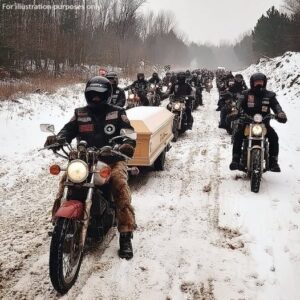
27 Bikers Rode 1,200 Miles Through A Blizzard To Bring a Dying Soldier Home
27 bikers rode 1,200 miles through a blizzard to bring a dying soldier home after the military said his body would arrive “when weather permits.” Marine Corporal…

Boyfriend buys flowers again, and the brunette isn’t thrilled—but the blonde’s comeback is pure gold! 😱🤣 Check the first comment 👇👇
Why It’s Funny: The unexpected twist and literal interpretation of the brunette’s statement make this joke a classic example of blonde humor. 2. The CEO’s Job Interview…
After My Husband’s Passing, a Difficult Family Conversation Led to a Heartwarming Discovery
After my husband passed away, the house we had shared for so many years suddenly felt unfamiliar and painfully quiet. For months, our lives had revolved around…
The Hidden Legacy: How a Scuffed Locket Reunited a Mother and Her Pilot Son
The business class cabin moved with its usual rhythm of quiet importance — tailored suits, glowing screens, and the soft confidence of people accustomed to comfort. When…
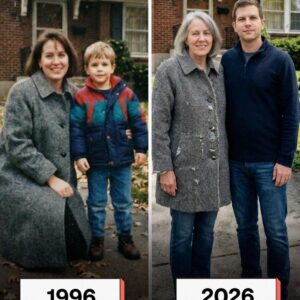
My Mom Wore the Same Ragged Coat for Thirty Winters – After Her Funeral, I Checked the Pockets and Fell to My Knees
My name is Jimmy. I’m thirty-six years old, and for most of my childhood, I was embarrassed by a coat. Charcoal gray wool. Thinning at the elbows….
My Late Daughter Sent A Package That Changed My Entire Life
My life changed forever six months ago when my daughter Darla and her husband perished in a plane accident. At seventy one years old I suddenly became…