My name is Robert Hayes and I spent twenty years in the Marine Corps learning about honor and courage. At fifty-two years old I found myself at a busy airport terminal with my eight-year-old daughter Emma. We were traveling to my childhood home in the Rockies as a tribute to my late wife Maria who had passed away from cancer. I had spent all my savings on two first-class tickets because I wanted Emma to feel special after a difficult year of mourning.
While we waited to board our flight in the July heat I noticed a woman nearby who was hiding under heavy layers of clothing. She wore a wide hat and a thick scarf to cover the extensive scarring left on her body by a house fire. The gate agent treated her with impatience when she struggled to hold her documents with her injured fingers.
I watched the crowd groan with frustration while Sarah Mitchell tried to gather her scattered papers from the floor. The agent ordered her to step aside because she was slowing down the line for other passengers. I felt a deep sense of duty to help her because a Marine never leaves a wounded person behind. I stepped forward to collect
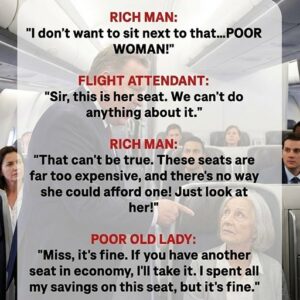
her documents and noticed she was assigned to a middle seat in the back of the plane. I realized that the comfort of my first-class seats was much more important for her recovery than for our luxury. I commanded the agent to swap our tickets so she could have my seat in the front row for her medical dignity. I explained to Emma that we were moving to the back of the plane for a special mission and she smiled in agreement.
The flight in the back was very cramped but I felt a sense of peace when the attendant gave me a note from Sarah. She thanked me for recognizing her humanity and giving her back a sense of pride. After we landed we spent three days at my father’s cabin in the mountains while Emma played in the meadows. Our quiet retreat was interrupted when a military helicopter landed and Colonel James Morrison stepped out to speak with me. He revealed that the woman I helped was the
widow of a legendary four-star commander named General William Mitchell. My simple act of kindness had reached the highest levels of the Pentagon and shifted the course of her life. She had been living in isolation but now wanted to use her influence to help other survivors.
Sarah launched a national foundation to help burn survivors travel with dignity and hired me as a logistics consultant. I received the Citizen Service Medal for my actions but the real reward was seeing Sarah gain the confidence to show her face in public. Six months later I stood in a Washington ballroom and spoke about how sacrifice defines
our character more than the seats we occupy. Emma sat in the front row and looked at me with a pride that had nothing to do with expensive tickets. I realized that our trip to the Rockies was meant to show my daughter that true strength comes from helping others up. We are now dedicated to moving people with the care they deserve while looking toward a limitless future. My wife Maria would have been proud to see the man I became during that flight.